In Edgewater Park, the hours right after a fire decide whether soot etches surfaces permanently and whether the wet structure starts to mold. Our crew seals salvageable framing, removes what is charred past saving, and treats the cavities where smoke quietly settled. In area, attached garages and shared basements give fire and smoke extra paths we always check. Documentation tracks every phase, from stabilization through deodorization, so nothing is left to a verbal account. Call 551-237-7458 day or night and our Edgewater Park fire crew responds.
What Soot Does To A Home
The damage that sets the claim size usually has little to do with the visible burn area. The acid in wet soot smears and etches the longer it sits, turning a cleanable surface into a permanent stain.
The response covers board-up, structural drying, soot and residue cleaning, and odor neutralization as one sequenced job. We photograph each surface before and after cleaning so the soot work is shown, not merely claimed.
How Odor Is Removed For Good
If the smoke smell came back weeks after the work, the odor was masked, not removed. If smoke entered the HVAC, the ducts are cleaned to NADCA standards before re-occupancy so the system stops recirculating residue.
The honest call on the HVAC is part of the scope, because guessing wrong reopens the odor complaint later. We finish on odor, not on appearance, because appearance is the easy part of a fire loss.
Why We Stabilize And Dry Immediately — What To Know
A fire leaves two problems running at once: what the flames burned and what the hoses soaked while putting them out. Wet soot smears and etches the longer it sits, so the moisture has to come out before it sets the residue permanently.
Drying and soot cleaning run together, sequenced so the wet framing is never left to sit while the surfaces get cleaned. Handling the water early is what keeps a fire loss from turning into a second, avoidable mold claim weeks later.
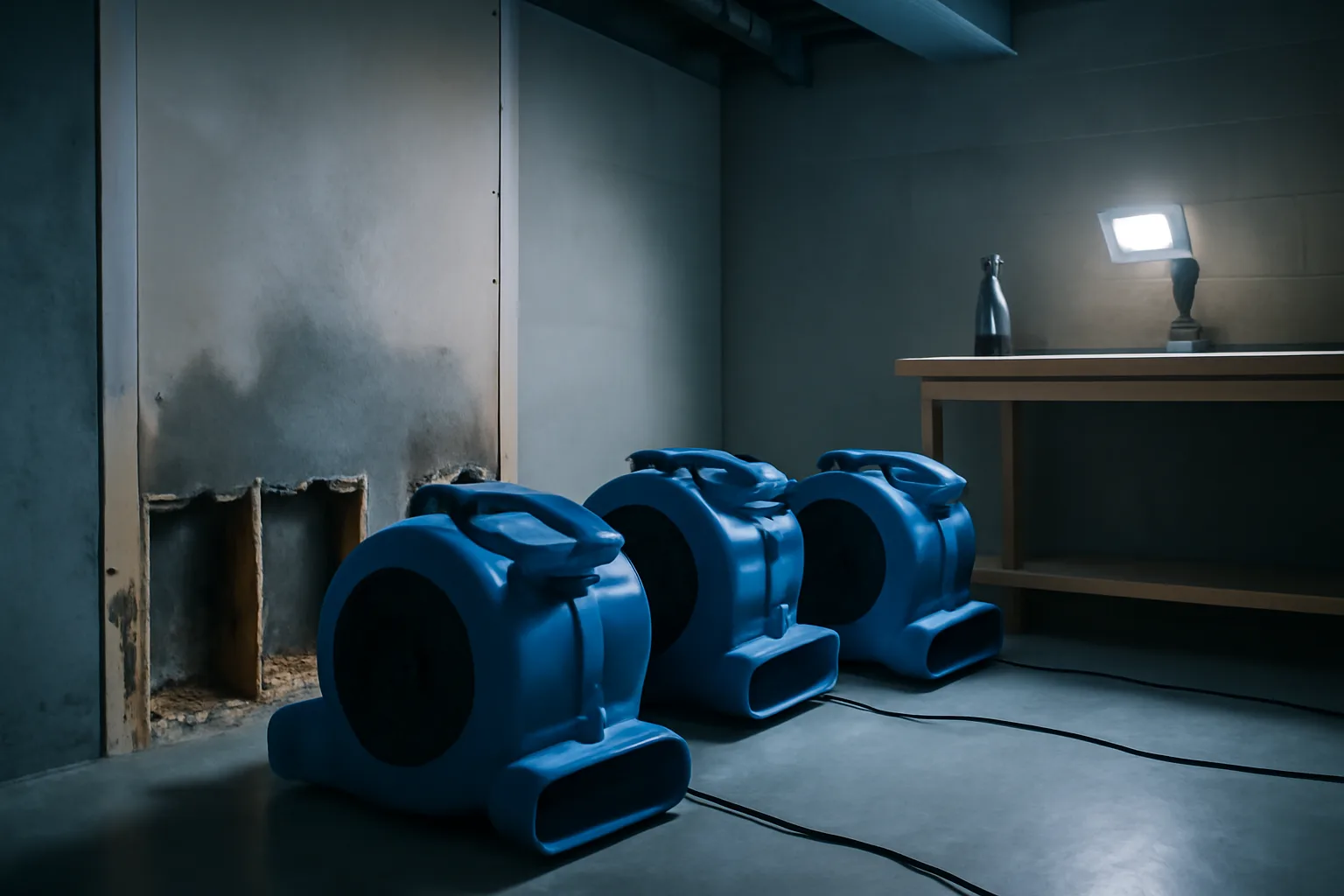
The water used to extinguish a fire saturates framing, drywall, and contents that the flames never touched. We carry the water side through to verified-dry, so the rebuild sits on sound, dry framing instead of a hidden problem. The team extracts first, dries the envelope on documented readings, and only then carries on with soot and odor work. Wet soot smears and etches the longer it sits, so the moisture has to come out before it sets the residue permanently.
Why We Treat Residue Immediately — What Counts
Soot is acidic, and it keeps corroding metal, glass, grout, and finishes for as long as it sits uncleaned. Glass, chrome, and finished metal pit and cloud; grout and porous stone absorb the residue and stain for good.
We address the surfaces the smoke actually reached, not just the obvious ones, and we do it quickly. Acting in the first days is what keeps a fire loss from spreading into surfaces the flames never even reached.
Soot is not inert; it is corrosive, and the clock on permanent staining starts the moment the fire goes out. A quick soot response is the difference between salvaging surfaces and rebuilding them. We move fast on soot precisely because the residue is corrosive, treating it before it etches anything permanently. Glass, chrome, and finished metal pit and cloud; grout and porous stone absorb the residue and stain for good.
How We Sort Salvage From Loss — No Fluff
A fire loss is not only about the structure — it is about everything inside it the smoke and water reached. Salvageable items are inventoried, packed out, and cleaned off-site while the structure is restored, then returned.
The contents inventory becomes part of the claim file, so the belongings are supported as fully as the structure. That way the belongings side of the claim is as clean and documented as the building side, with no loose ends.
Smoke and suppression water reach the contents of a home as surely as the structure, so they get their own process. We return the cleaned contents once the structure is ready, closing the loss completely rather than partially. Photographs of every packed-out item back the contents portion of the scope, leaving no gaps for the carrier to question. The pack-out gets fragile and salvageable contents out of the work zone so they are not damaged further during restoration.
The work that wraps around this
Property damage in {city} almost never stays in one box — fire damage restoration often overlaps with water damage restoration, storm damage restoration, air quality remediation, Category-3 water cleanup, post-loss reconstruction, and you get a single crew for every part of it. The same equipment and discipline reach and everywhere else across area.
If you searched for water damage restoration services near me, Whatever the loss, you reach the people who do the work, and you know the scope before we start. Call 551-237-7458 any hour, read What It Really Takes to Restore a Edgewater Park Home After a Fire on our blog, or head back to our Edgewater Park home page to see everything we do.